Property owners in Tomball, Cypress, and The Woodlands often ask if cutting back large canopy branches can keep tall trees away from roofs or power lines. While topping may seem like a straightforward solution, cutting large branches back to blunt stubs severely harms tree biology and creates hidden hazards. Understanding how trees respond to topping helps protect both your investment and your property.
What Tree Topping Does to Branch Structure
Tree topping—sometimes called heading, stubbing, or dehorning—is the indiscriminate cutting back of tree branches to stubs or to lateral branches not large enough to assume the terminal role. It removes the leaves that produce food through photosynthesis, effectively starving the tree.
In response to this extreme shock, the tree expends stored energy reserves to produce dense clusters of rapid, upright shoots known as epicormic sprouts or water sprouts. Unlike naturally grown branches, these emergency shoots are weakly attached to the outer edge of the wood rather than anchored deep within the trunk's growth rings.
Primary Dangers of Topping Trees
- Starvation and severe shock from the sudden loss of 50 to 100 percent of the food-producing canopy.
- Sunscald on previously shaded interior bark, which cracks under intense Texas summer heat.
- Decay and fungal entry, because trees cannot naturally seal large, blunt stub cuts.
- Weak branch attachment, leading to shoots that break off easily in high winds once they gain weight.
The False Sense of Storm Safety
Homeowners often agree to topping because an unqualified contractor promises it will make the tree safer during Gulf Coast severe weather. In reality, topped trees become significantly more hazardous within two to four years.
Because the rapid regrowth occurs on top of rotting cut stubs, the new limbs lack structural integrity. When strong thunderstorms or tropical depressions move through Northwest Houston, these poorly attached limbs tear away far more easily than a naturally pruned canopy, endangering roofs, fences, and vehicles below.
Industry-Standard Alternatives to Topping
- Crown reduction: Shortening a limb by cutting back to an existing lateral branch that is at least one-third the diameter of the stem being removed.
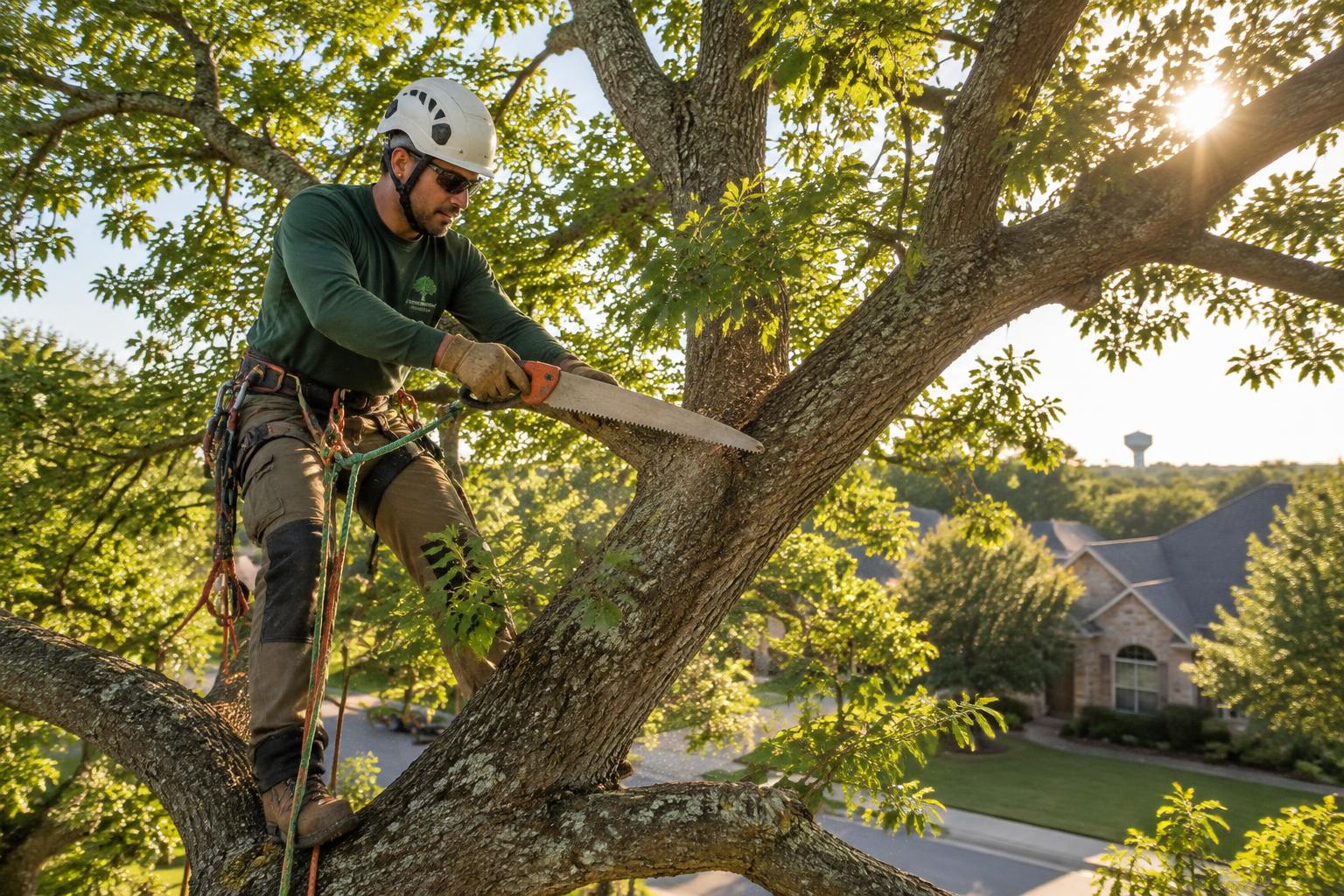
- Crown thinning: Selectively removing weak or crossing interior branches to allow wind to pass freely through the canopy without altering the tree's natural form.
- Crown cleaning: Removing dead, diseased, or broken limbs to eliminate hazards while maintaining healthy foliage.
- Structural pruning: Guiding the architecture of developing trees early to prevent canopy conflicts before they require major cuts.
Want a Specialist to Take a Look?
Book a free consultation with our TCIA Certified Tree Care Specialists and save 10% on this month's service.