Native soils throughout Tomball and northern Harris County contain high concentrations of dense clay that swell during wet periods and shrink into hardened blocks during summer droughts. These physical properties directly affect how tree roots establish, breathe, and support mature canopies. Understanding the behavior of heavy clay helps property owners protect root health and avoid common planting and maintenance mistakes.
Oxygen Depletion and Shallow Root Growth
Tree roots require oxygen to metabolize nutrients and sustain cellular growth. Heavy clay particles pack tightly together, leaving very little pore space for soil gases to exchange with the atmosphere. When rains saturate clay soils in Tomball, water displaces the remaining oxygen, creating anaerobic conditions that suffocate fine feeder roots.
To survive, most trees in clay profiles develop unusually shallow root systems, concentrating 80 to 90 percent of their roots in the top twelve to eighteen inches of soil where oxygen is still accessible. While this adaptation keeps the tree alive, it makes root systems vulnerable to lawn mower damage, drought stress, and foot or vehicle traffic.
The Shrink-Swell Cycle and Structural Anchoring
Clay expands significantly during wet winters and spring storms, then contracts drastically during prolonged dry spells in July and August. This severe shrinking creates deep soil fissures that physically shear delicate root hairs and dry out root zones from below ground level.
During severe weather events, saturated clay loses shear strength and behaves like a heavy slurry. Shallow root plates in waterlogged clay have less mechanical resistance, which increases the likelihood of windthrow when Gulf storm systems and severe squall lines push through Northwest Houston.
Signs of Clay-Induced Root Stress
- Visible surface roots snaking across lawns to escape compacted, low-oxygen subsoil.
- Interveinal chlorosis, where leaves turn pale yellow with green veins due to poor nutrient uptake in dense soil.
- Gradual canopy dieback starting at the outer crown tips and working inward.
- Persistent standing water around the root flare more than 24 hours after rainfall.
Techniques for Mitigating Compacted Clay
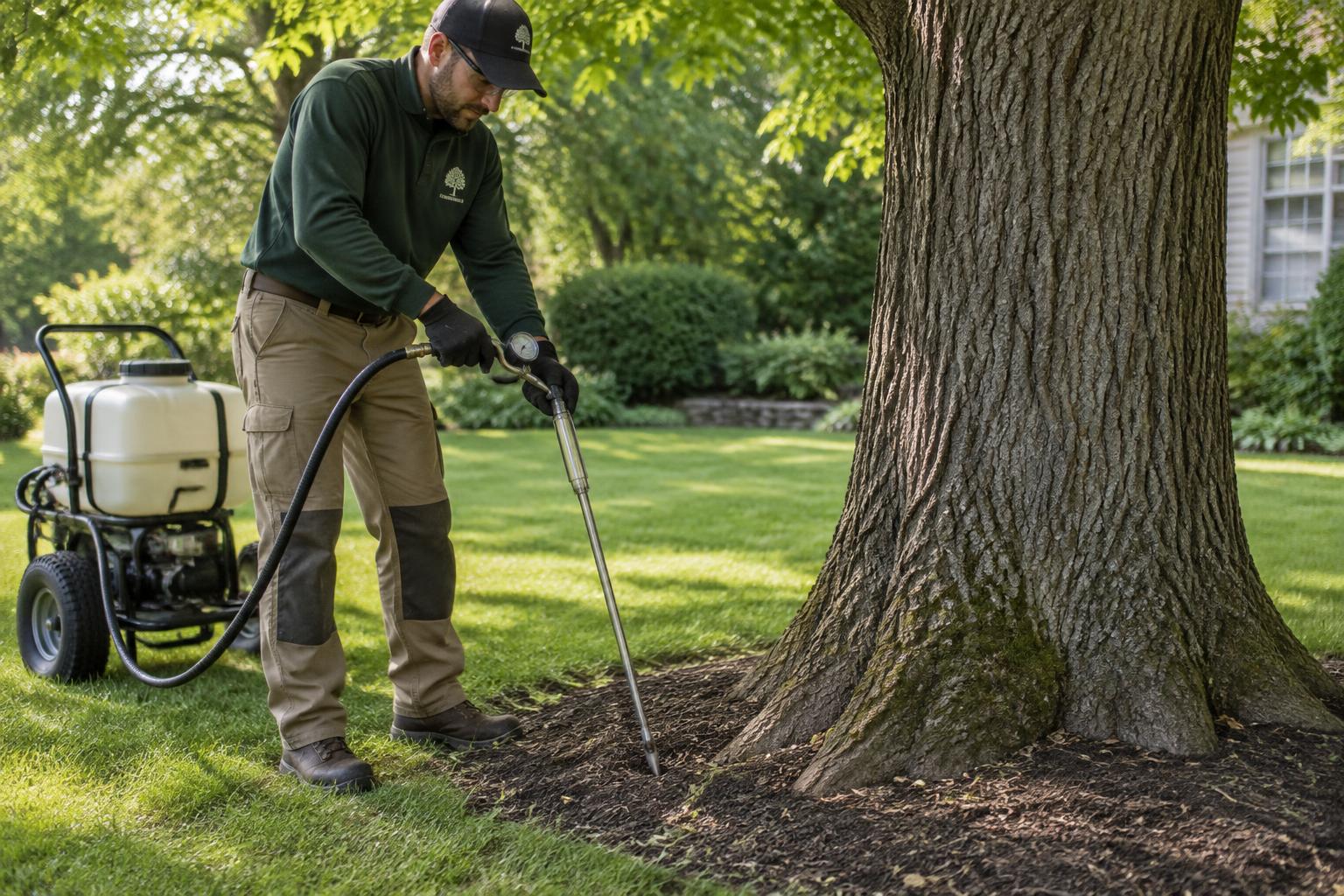
Tilling around established trees destroys the shallow feeder roots that trees rely on in clay soil. Instead, non-invasive decompaction using pneumatic air tools—often called air spading—can fracture dense clay without severing roots. Incorporating aged organic matter into these fractured radial trenches introduces permanent pore space and stimulates beneficial microbial activity.
Applying a coarse arborist wood chip mulch two to four inches deep out to the dripline also insulates clay from baking in direct sun, reduces surface crusting, and slowly feeds organic carbon into the soil profile over time.
Choosing Species Suited for Local Clay
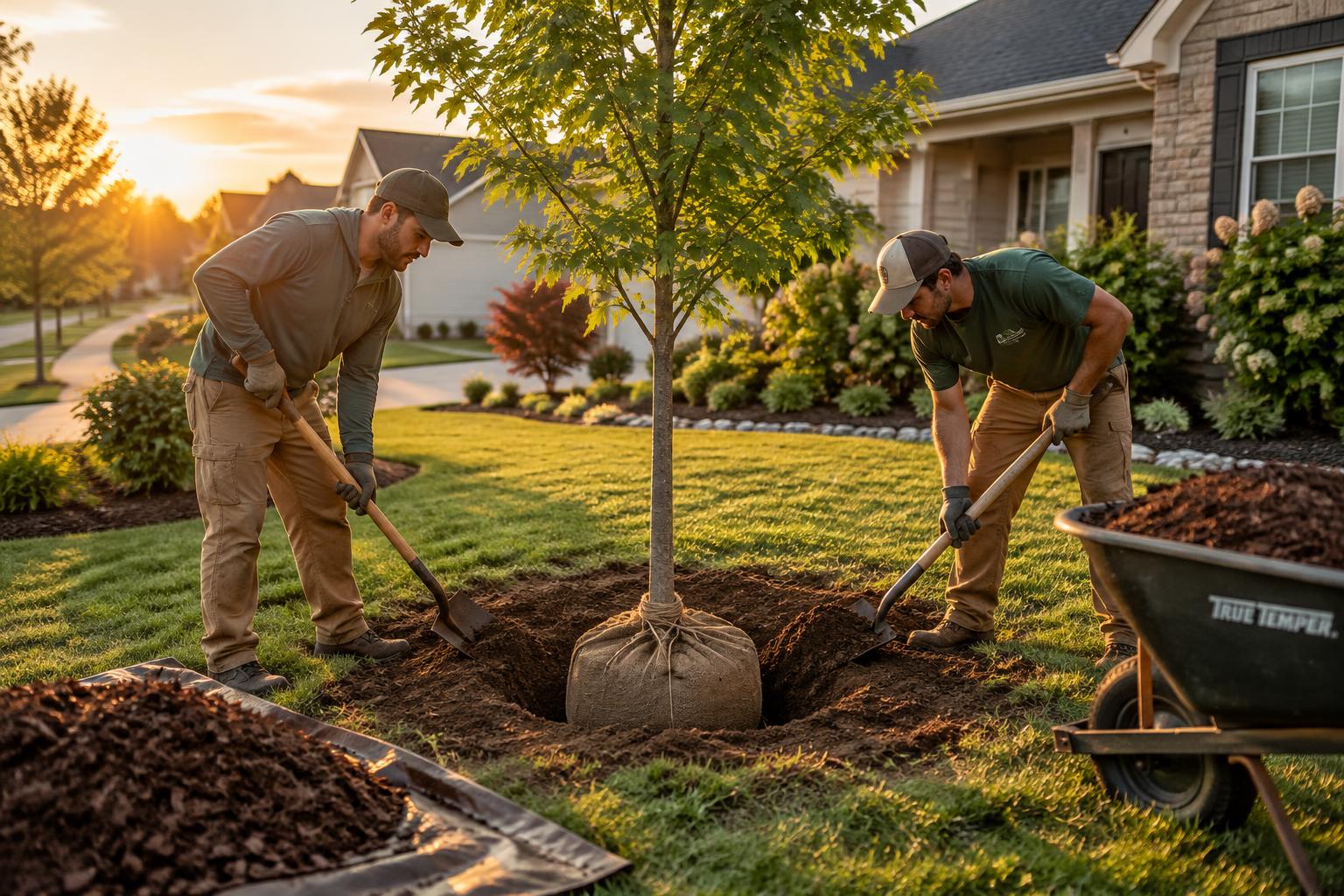
When planting in Tomball, species selection must account for poor internal drainage. Native trees adapted to floodplains and clay basins—such as Cedar Elm, Bald Cypress, Overcup Oak, and Drummond Red Maple—handle saturated, low-oxygen soil far better than upland species that demand loose, sandy loam.
Always install new trees slightly above grade in clay sites. Setting the root ball one to two inches higher than the surrounding lawn prevents the root flare from settling into a depression that collects suffocating runoff.
Want a Specialist to Take a Look?
Book a free consultation with our TCIA Certified Tree Care Specialists and save 10% on this month's service.