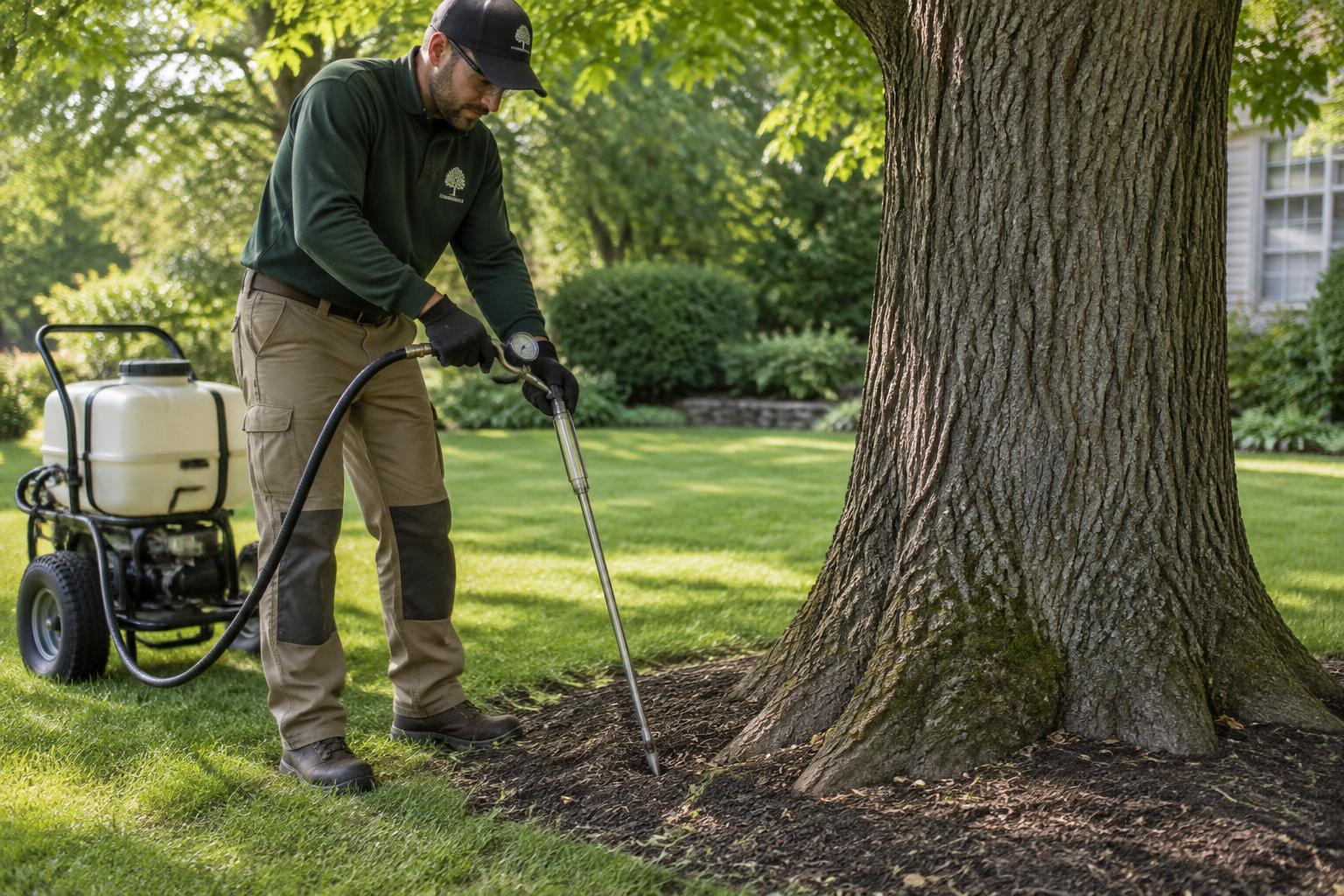
After months of triple-digit heat and drought across Tomball, Cypress, and The Woodlands, fall brings welcome relief to residential landscapes. While above-ground canopy growth slows as dormancy nears, root systems remain active in the warm soil. Taking deliberate maintenance steps between October and December sets your trees up to withstand winter cold and push vigorous growth next spring.
Assess Canopy Damage and Clear Deadwood
- Inspect the upper crown for limbs killed by late-summer drought or fungal infections.
- Prune out dead, split, or hazardous branches before fast-moving blue norther cold fronts bring high winds.
- Avoid aggressive live pruning during early fall; save major structural shaping for full winter dormancy in January and February.
Provide Deep Root Watering Before Hard Freezes
Cooler ambient temperatures can create a false sense that trees no longer need supplemental water. In Northwest Houston, extended dry spells often stretch through November, leaving root systems depleted right before freezing weather arrives.
Run a soaker hose or slow sprinkler across the outer two-thirds of the canopy drip line once or twice a month if rainfall is sparse. Hydrated soil holds significantly more heat than dry soil, insulating root tips against sudden temperature plunges.
Replenish the Protective Mulch Layer
Summer heat and humidity rapidly break down organic ground covers in communities like Magnolia and Spring. Fall is the right time to rake back compacted material and refresh your mulch rings with clean, native arborist wood chips.
Maintain a level depth of two to three inches, extending as far toward the drip line as lawn maintenance allows. Always keep mulch pulled four to six inches back from the trunk flare to prevent excess moisture retention against the bark.
Capitalize on Prime Planting Season
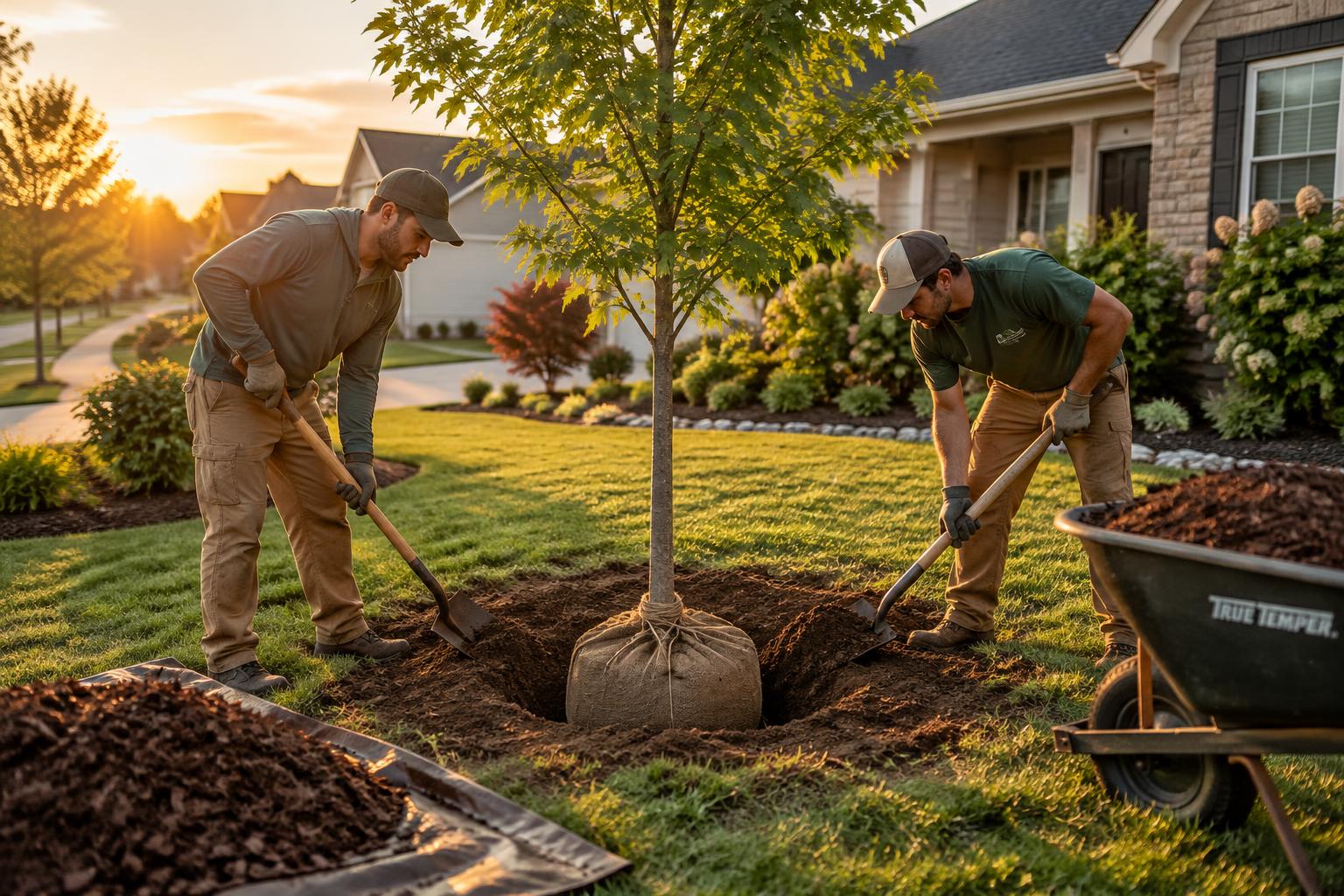
In Texas, autumn is the single best time of year to install new trees. Moderate daytime temperatures prevent transplanted trees from losing moisture through their leaves, while our warm clay soil encourages uninterrupted root establishment throughout the winter.
When installing new specimens, verify that the root flare sits slightly above the surrounding grade. Planting too deep in local gumbo soils leads to poor drainage, suffocating roots before spring bud break.
Late-Fall Property Maintenance Priorities
- Rake and compost fallen leaves showing signs of tar spot or powdery mildew to lower next year's fungal spore count.
- Loosen or remove staking hardware and trunk guards from young trees to eliminate the risk of trunk girdling.
- Have a certified arborist inspect mature pines and water oaks showing canopy dieback or fungal brackets near home structures.
Want a Specialist to Take a Look?
Book a free consultation with our TCIA Certified Tree Care Specialists and save 10% on this month's service.