Homeowners in Tomball, Magnolia and Cypress ask us this constantly: when should trees be trimmed? The honest answer is that a hazardous limb should come down the day you notice it — but everything else is far better off on a schedule.
Dormant season is the sweet spot
Late fall and winter, once the leaves drop and growth slows, is the ideal window for structural pruning. The tree's metabolism has slowed, so the cuts stress it far less, and the wounds are sealed off before spring growth begins.
With the canopy bare, our specialists can also see the tree's true framework — crossing limbs, weak attachments, decay pockets and deadwood that hide behind foliage the rest of the year.
Why dormant pruning protects tree health
- Fewer active insects and fungal spores means far less risk of disease entering a fresh cut.
- Oak wilt risk drops sharply outside the high-risk spring months.
- The tree channels spring energy into strong new growth instead of wound repair.
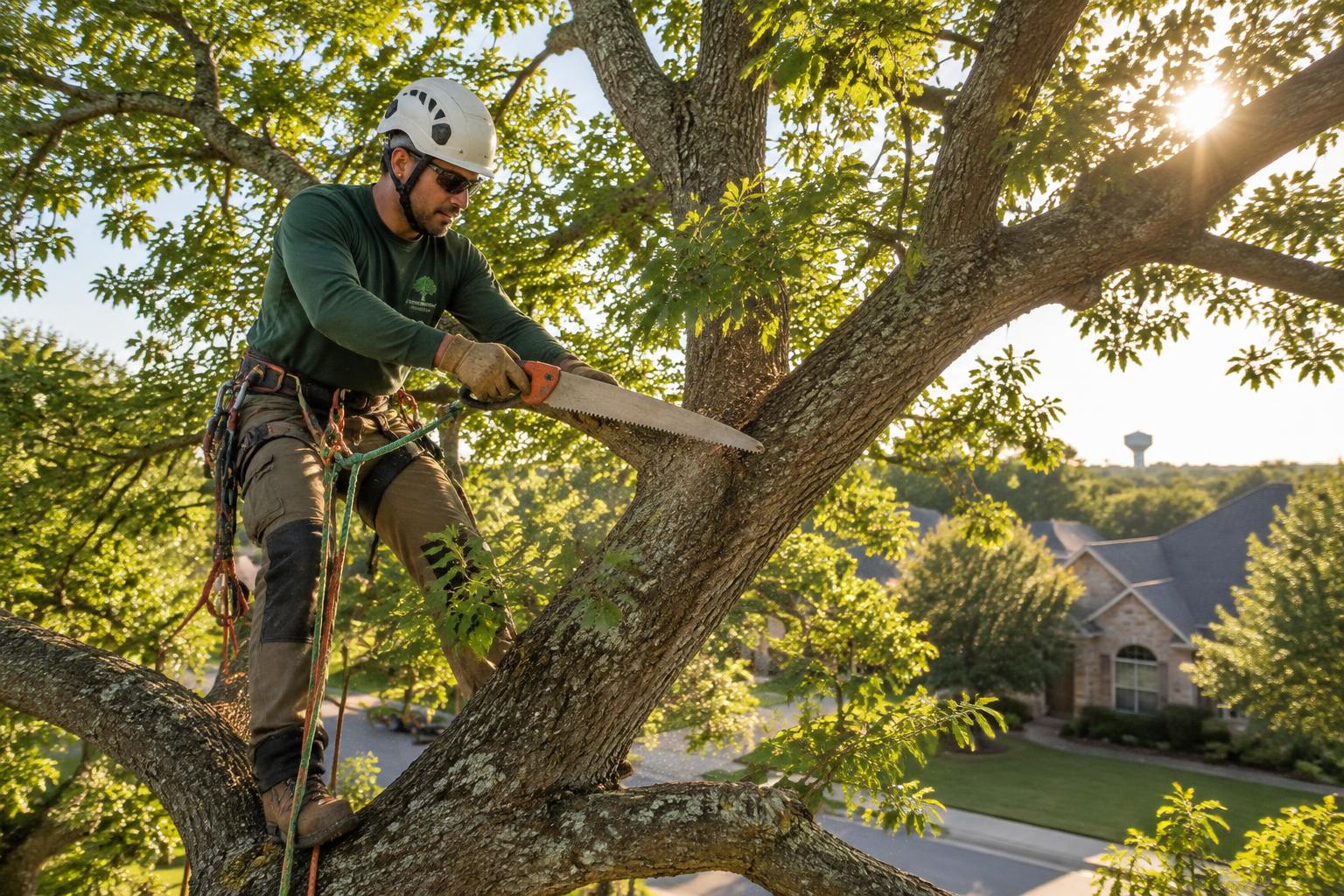
- Clear sightlines let us make precise cuts at the branch collar every time.
What should not wait
Safety always overrides the calendar. Broken or hanging limbs, branches touching a roof or power service, and storm-damaged wood should be handled immediately, whatever the season.
Light clearance trimming — lifting branches off a driveway or walkway — is also fine year-round because the cuts are small and the tree is barely affected.
A simple yearly rhythm
- Winter: structural pruning, deadwood removal, canopy thinning.
- Spring: watch for pests and stress; avoid major oak pruning.
- Summer: root-zone moisture checks and light clearance work only.
- Fall: plan next season's pruning and schedule deep root feeding.
Want a Specialist to Take a Look?
Book a free consultation with our TCIA Certified Tree Care Specialists and save 10% on this month's service.