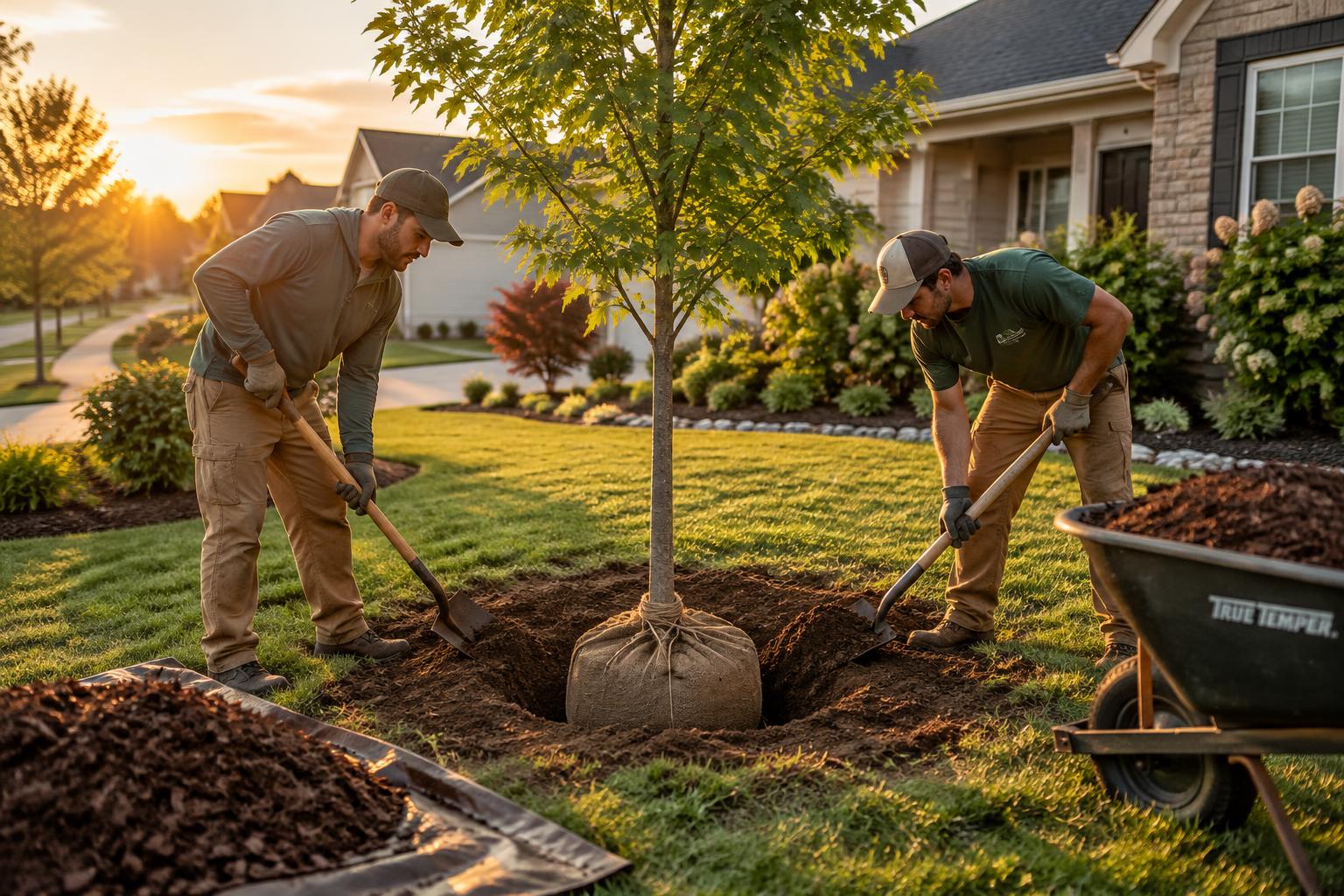
We would always rather save a tree than remove it. But some trees have passed the point where pruning or treatment helps, and leaving them standing puts your home, your car and your family at risk during the next storm.
Signs worth a professional look
- Large dead sections in the canopy, or no leaves at all on major limbs.
- Mushrooms or conks growing at the base — usually a sign of internal decay.
- A hollow, soft or crumbling trunk you can push a screwdriver into.
- Deep vertical cracks or splits running along the trunk.
- A sudden new lean, especially with heaved or cracked soil on the opposite side.
- Roots that have been cut, paved over or damaged by nearby construction.
- Repeated limb drops during ordinary weather — not just major storms.
Not every sick tree needs removal
Thin foliage, early leaf drop and small dead twigs are often stress signals, not death sentences. Trees like these frequently recover with deep root fertilization, proper mulching, a watering plan and targeted pruning.
That is why we assess before we quote. A certified specialist looks at the whole tree — roots, trunk, canopy and the soil around it — and tells you plainly whether it can be saved.
How safe removal actually works
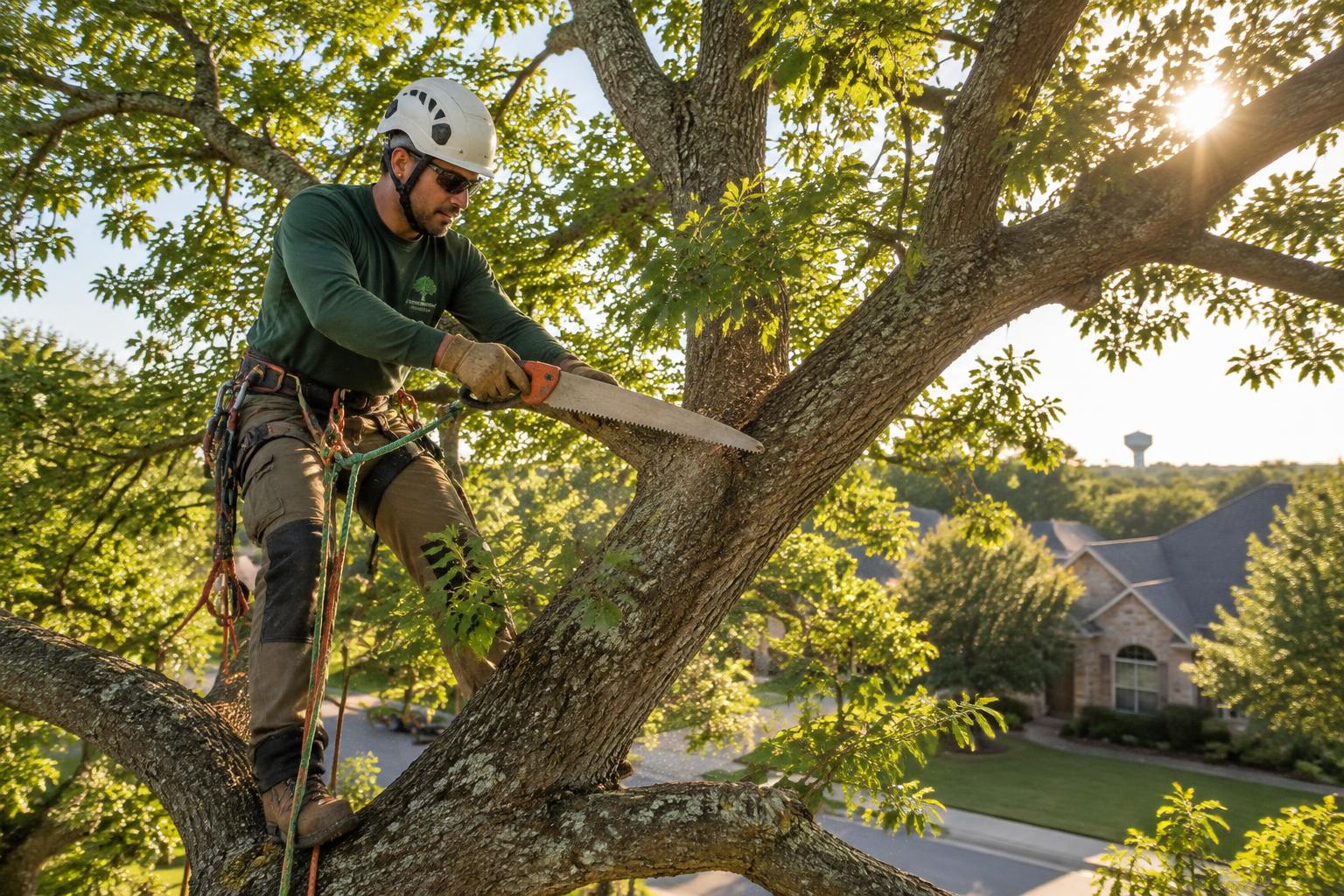
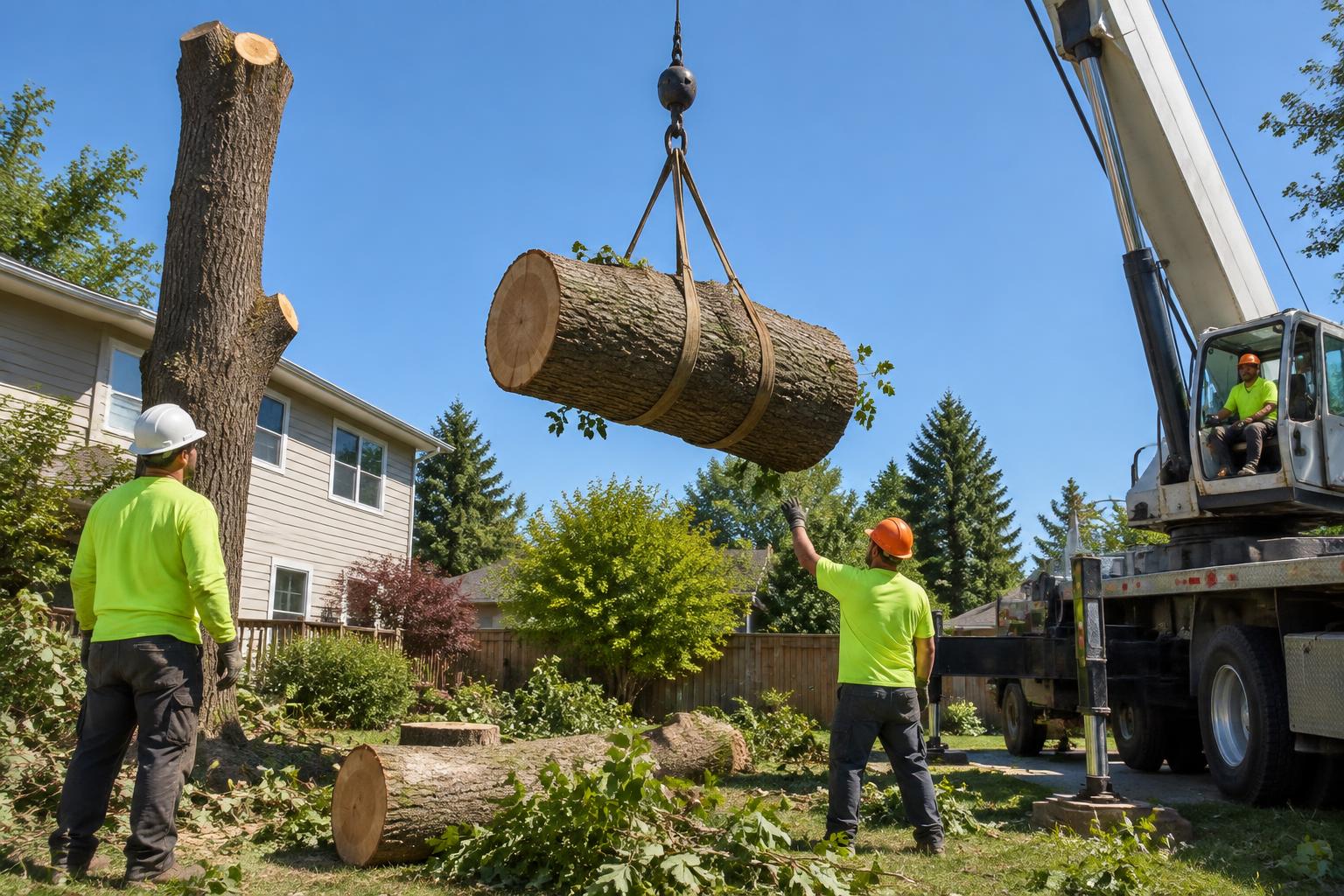
When a tree does have to go, the work is methodical. We rope and lower limbs in sections rather than dropping them, protect fences, roofs and landscaping, and stage equipment where it will not damage your lawn or driveway.
Every removal ends the same way: branches chipped, wood hauled away, and the site raked clean.
Want a Specialist to Take a Look?
Book a free consultation with our TCIA Certified Tree Care Specialists and save 10% on this month's service.