Mature trees in communities like Tomball, Cypress, and The Woodlands face severe tests during Gulf Coast storm seasons. Saturated soils combined with sudden downbursts or tropical storm winds exploit pre-existing structural flaws, turning valuable shade trees into major liabilities.
How Saturated Soils Compound Wind Risk
Northwest Houston landscapes often feature heavy clay or clay-loam soils that drain slowly after prolonged rainfall. When successive storms saturate the root zone, the soil loses friction, significantly weakening a tree's anchorage against horizontal wind loads.
Loblolly pines, water oaks, and post oaks with restricted or severed root systems are especially prone to whole-tree uprooting under these conditions. Knowing your soil drainage characteristics helps determine when soil-root failure is an elevated threat.
Visible Warning Signs of Structural Instability
- Codominant stems with V-shaped unions and included bark, which are prone to splitting under wind loads.
- Heavy accumulation of deadwood over two inches in diameter within the upper canopy.
- Cavities, hollows, or wood decay fungi (conks) visible on main trunks or major scaffolds.
- Cracked, heaving soil or exposed roots on the side opposite a recent tree lean.
Canopy Management: Crown Thinning vs. Harmful Practices
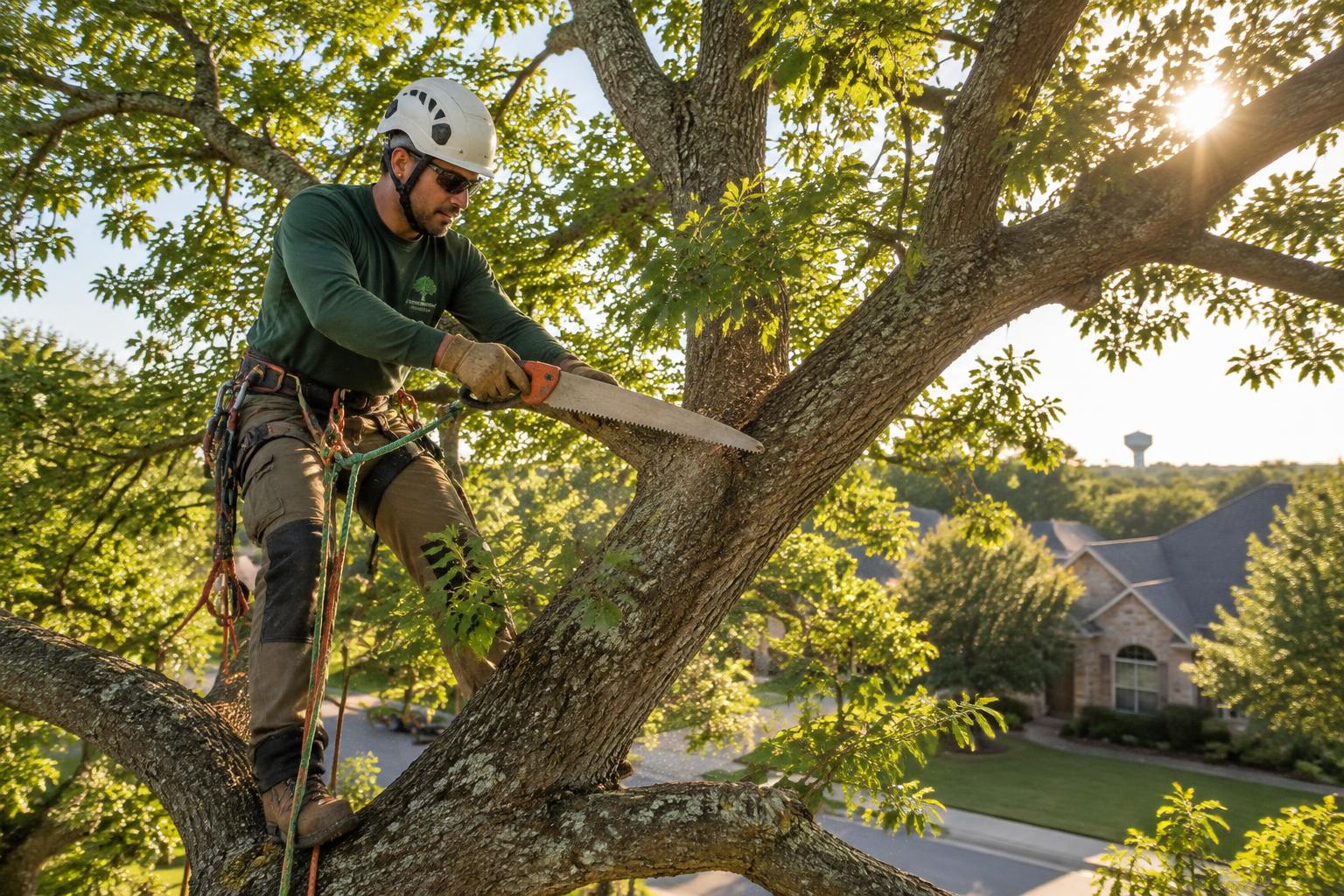
Proper canopy management reduces wind resistance without stripping a tree of its natural dampening ability. Professional crown thinning selectively removes dead, diseased, or rubbing branches while maintaining an even foliage distribution that absorbs wind energy safely.
Property owners must strictly avoid topping or 'lion-tailing'—stripping interior foliage to leave only tufts at branch tips. Lion-tailing shifts mechanical stress to the ends of limbs, exponentially increasing the likelihood of branch breakage during high winds.
Actionable Pre-Storm Maintenance Checklist
- Clear low or encroaching limbs away from rooflines, driveways, and service drops before winds arrive.
- Inspect the root flare for soil displacement, severed roots from past construction, or grade changes.
- Install structural support systems, such as non-invasive cabling, for high-value trees with weak crotches.
- Schedule a comprehensive hazard evaluation with a TCIA Certified arborist well before peak tropical activity.
Want a Specialist to Take a Look?
Book a free consultation with our TCIA Certified Tree Care Specialists and save 10% on this month's service.