Trees in a forest feed themselves. Decades of fallen leaves break down into rich, loose soil that holds water and nutrients. Trees in a Texas yard get none of that — leaves are bagged, soil is compacted clay, and turf grass competes for every drop of water.
What deep root fertilization does
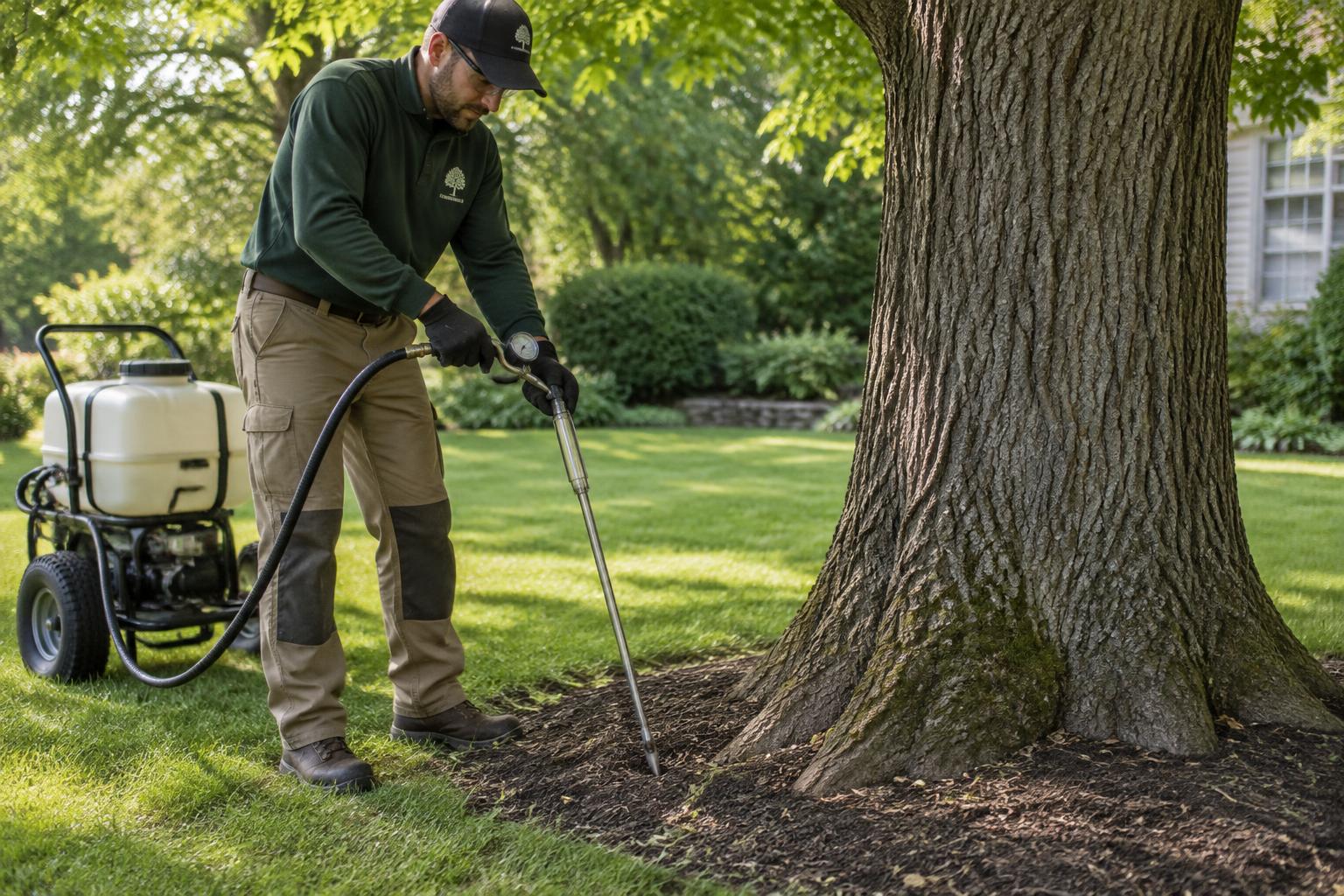
We inject a custom liquid nutrient blend under pressure into the soil around the tree, placing it 8 to 12 inches down where the feeder roots actually live.
The injection does two jobs at once: it delivers nutrients directly to the roots, and the pressure fractures compacted soil so air and water can move through it again.
Signs your trees would benefit
- Leaves that are smaller, paler or yellower than they used to be.
- Very little new growth at the branch tips year after year.
- Early fall color or leaf drop in late summer.
- Trees planted in heavy clay, or surrounded by lawn and hardscape.
- Recent construction, trenching or heavy equipment near the root zone.
How often it should be done
For most established trees in our area, once or twice a year is enough — typically fall, with a spring follow-up for trees under real stress.
Results are gradual rather than instant. You will usually see darker, fuller foliage and stronger tip growth by the following season.
Want a Specialist to Take a Look?
Book a free consultation with our TCIA Certified Tree Care Specialists and save 10% on this month's service.