A tree planted well outlives everyone who planted it. A tree planted badly — too close to the house, in the wrong soil, or set too deep in the hole — becomes a removal quote a decade later.
Start with the site, not the tree
- Measure the distance to your home, driveway, fence and septic field.
- Look up: overhead power lines rule out large shade species entirely.
- Note how many hours of direct sun the spot actually gets.
- Check drainage after heavy rain — standing water kills more young trees than drought.
Species that do well here
Live oak, cedar elm, bald cypress, Shumard oak and Texas red oak all handle our heat, clay soil and periodic drought once established. For smaller spaces, crepe myrtle, Mexican plum and yaupon holly give you flowers and structure without threatening your foundation.
Match the mature size to the space you actually have. A tree that reaches 60 feet needs room for a 40-foot canopy and the root spread underneath it.
Planting mistakes that cost trees their lives
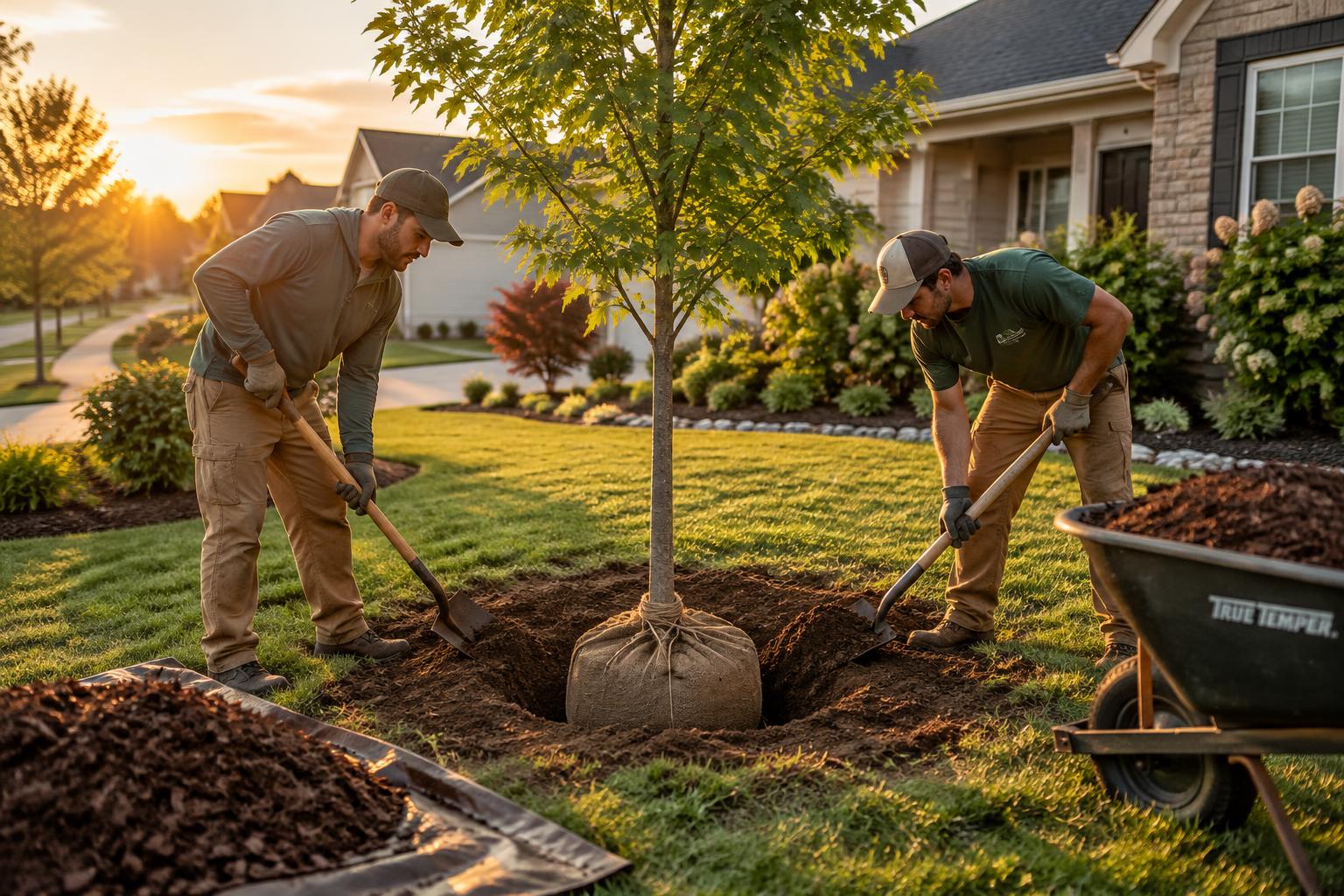
- Planting too deep — the root flare must stay visible above the soil line.
- Leaving burlap, wire baskets or nursery twine around the root ball.
- Piling mulch against the trunk instead of spreading it in a wide, shallow ring.
- Staking too tightly, so the trunk never develops strength on its own.
- Watering lightly and often instead of deeply and less frequently.
The first two years matter most
A new tree spends its first couple of seasons building roots, not canopy. Deep, consistent watering through that period is the single biggest factor in whether it survives its first Texas summer.
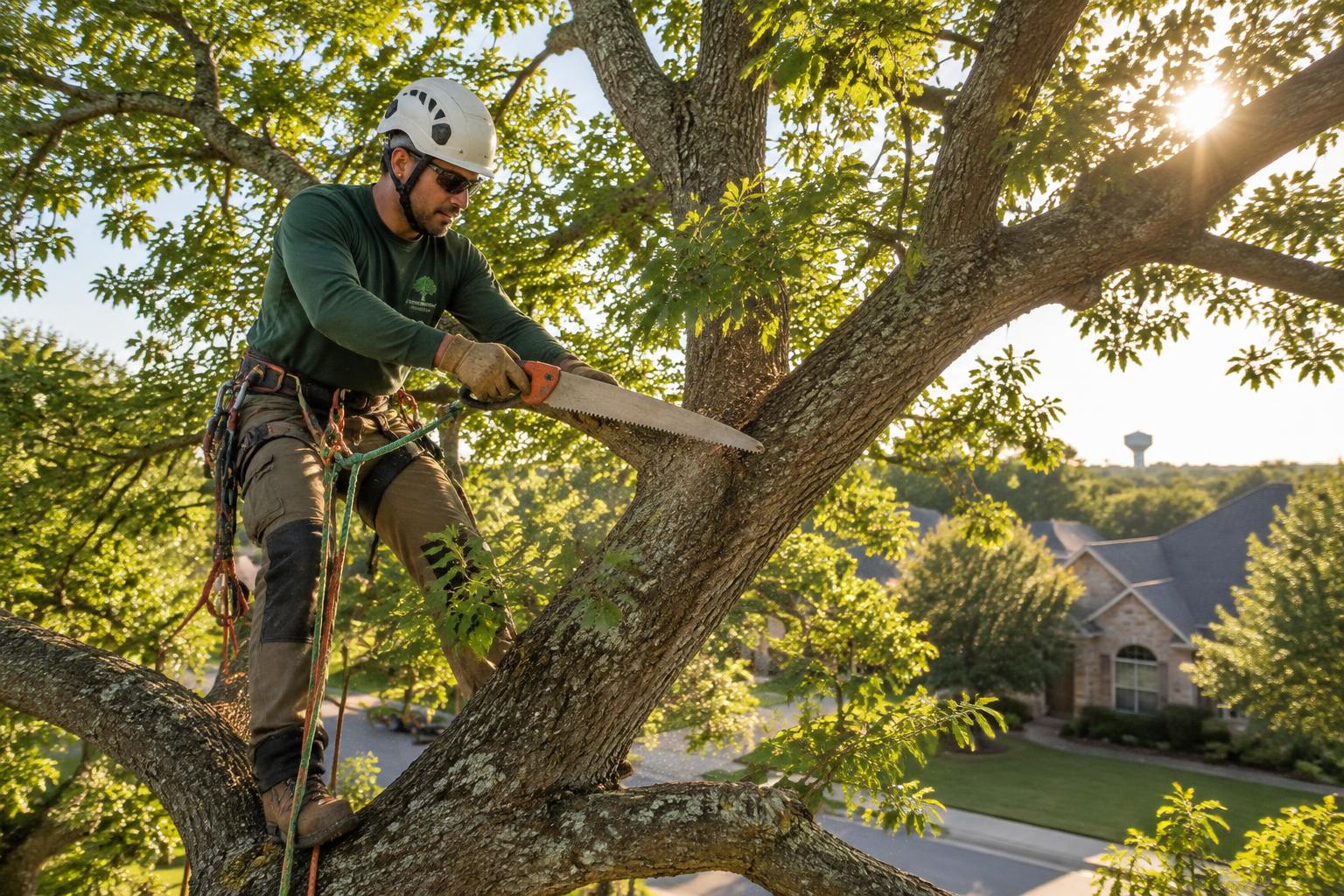
After that, a healthy tree largely takes care of itself — with light structural pruning as it matures to set it up for decades of strong growth.
Want a Specialist to Take a Look?
Book a free consultation with our TCIA Certified Tree Care Specialists and save 10% on this month's service.