Discovering dead branches, pest damage, or storm debris on a mature oak or pine often leads property owners to consider immediate removal. However, mature trees provide invaluable shade and property value across Tomball, Cypress, and The Woodlands, and many seemingly severe problems are manageable. Before deciding to take down a tree, a professional assessment can determine whether restorative care is a viable, cost-effective alternative.
Symptoms That Look Severe but Are Often Treatable
Not all visible tree distress indicates a fatal condition. A water oak dropping foliage in late summer or a loblolly pine losing its interior needles is often responding to dry conditions or natural needle turnover rather than a terminal disease.
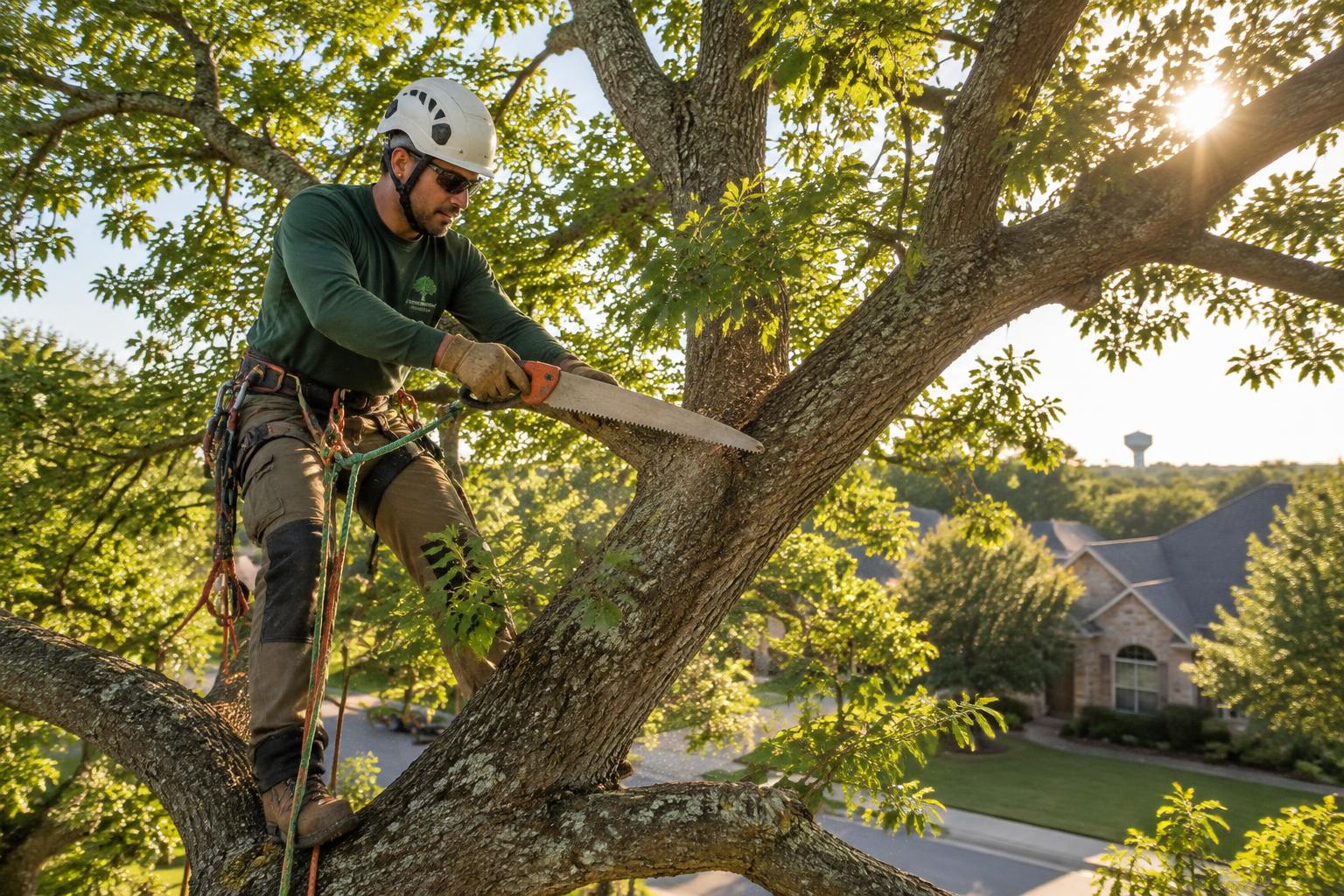
Similarly, storm damage that tears away secondary limbs can leave a tree looking severely disfigured, yet the structural integrity of the main trunk may remain sound. In many cases, corrective canopy thinning and deadwood removal allow the tree to compartmentalize wounds and generate new growth.
Treatable Conditions That Do Not Require Removal
- Canopy dieback that involves less than 25 to 30 percent of the overall foliage
- Co-dominant stems with narrow crotches that can be stabilized using supplemental cabling and bracing
- Superficial trunk wounds where the bark has been scraped or punctured without girdling the trunk circumference
- Minor pest infestations or fungal leaf spots that respond to targeted seasonal treatments
Addressing Root Flare and Soil Compaction Issues
Many struggling trees in neighborhoods around Magnolia and Spring suffer from buried root flares rather than structural failure. Heavy clay soils combined with over-mulching or landscape fill dirt suffocate the feeder roots and encourage girdling roots to wrap around the trunk.
Using an air-spade to excavate buried root flares and alleviate compacted soil allows oxygen and moisture to reach the root zone. This non-invasive corrective work frequently reverses chronic decline in mature shade trees without the need for removal.
Clear Indicators That Removal Is the Safer Choice
- Extensive trunk hollows or decay pockets involving more than one-third of the trunk's cross-sectional area
- Evidence of root plate failure, such as freshly mounded soil or a sudden lean after heavy rainfall
- Fruiting fungal bodies, such as bracket fungi or conks, growing directly from structural roots or the lower trunk base
- Severe, widespread infection by untreatable pathogens like advanced Hypoxylon canker on stressed post oaks
Want a Specialist to Take a Look?
Book a free consultation with our TCIA Certified Tree Care Specialists and save 10% on this month's service.