Many property owners assume a tree inspection is simply a quick glance up into the canopy to look for dead branches. In practice, a comprehensive evaluation by an ISA Certified Arborist is a methodical, multi-step assessment of the entire tree and its growing environment. In regions like Cypress, Spring, and The Woodlands, these inspections are critical for identifying hidden structural defects and disease before severe Gulf weather arrives.
The Ground-Up Assessment: Soil and Root Flares
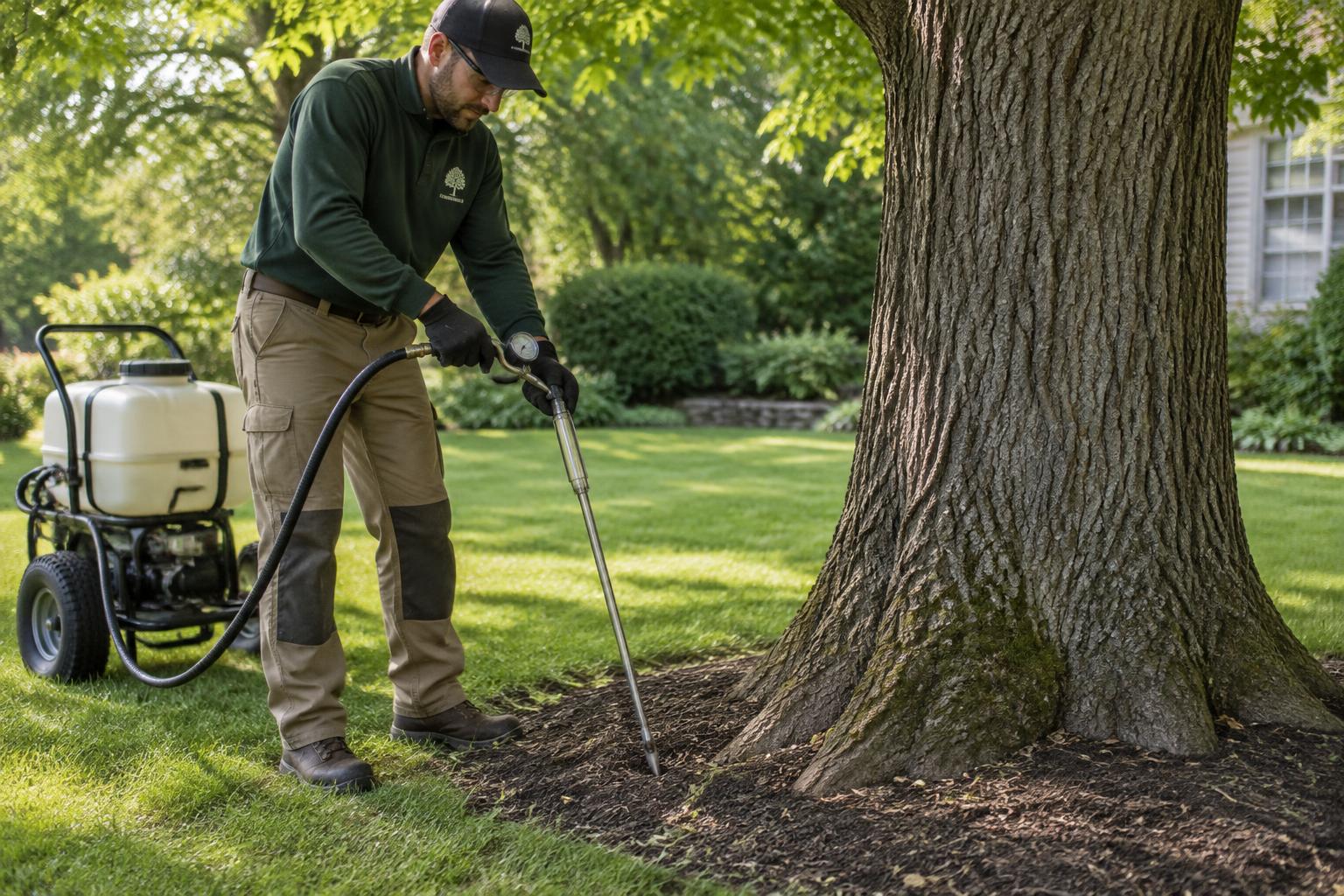
Every thorough inspection begins at the ground. Arborists examine the root flare—the area where the trunk expands as it enters the soil. If the flare is buried under excessive soil or mulch, trees are prone to collar rot and girdling roots that gradually choke the vascular system.
In areas like Tomball and Magnolia, local soil conditions play a major role in tree stability. Arborists check for soil compaction, surface heaving, cracked soil that indicates shifting root plates, and fungal fruiting bodies like mushrooms growing around the base, which often signal internal root decay.
Trunk Integrity and Structural Defects
- Presence of fungal conks, shelf mushrooms, or oozing sap indicating internal rot
- Co-dominant stems with included bark, which create weak union points prone to splitting in high winds
- Vertical frost cracks, lightning strikes, or mechanical damage that compromise load-bearing capacity
- Recent shifts in lean or ground disturbance suggesting compromised root anchoring
Canopy Density and Branch Architecture
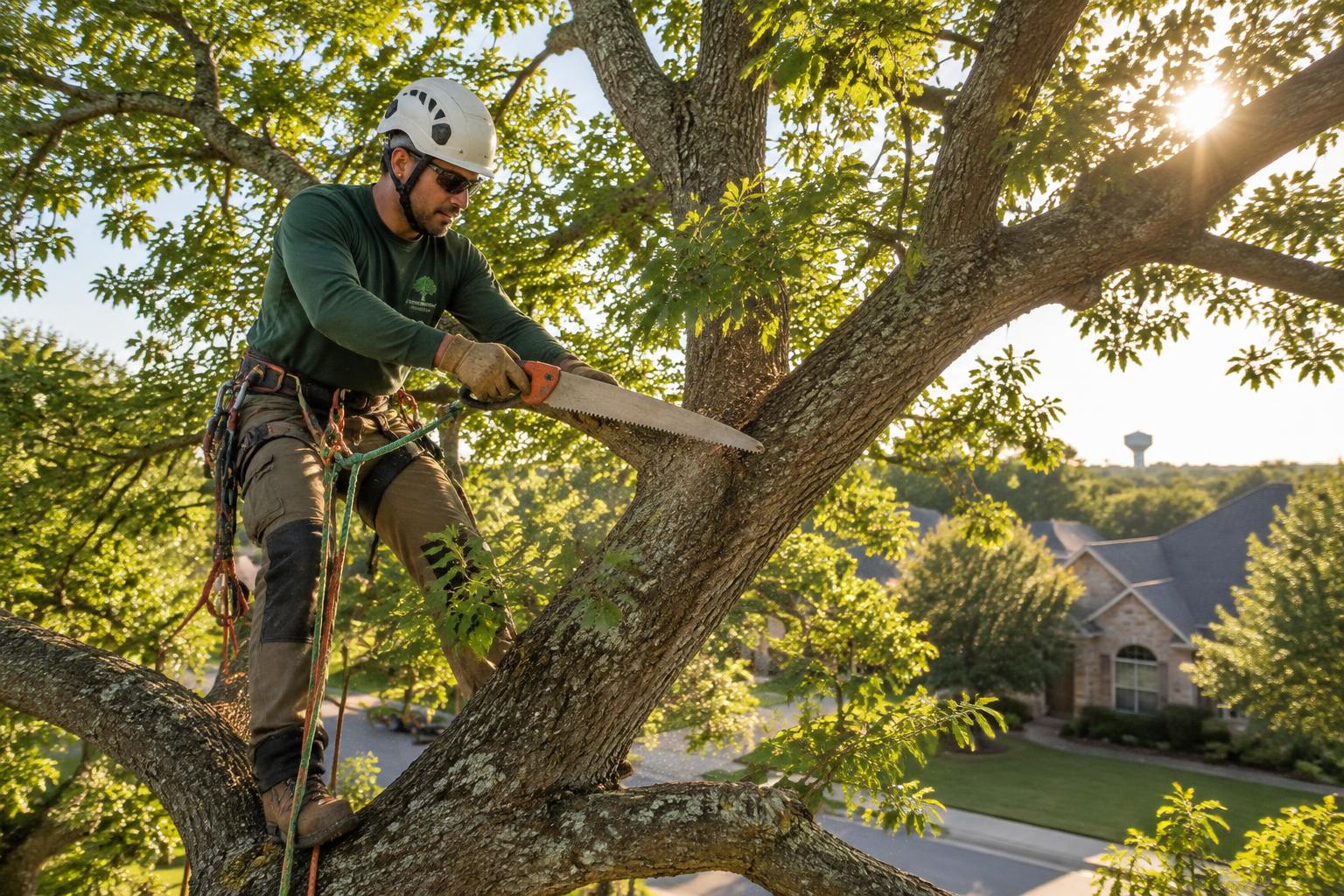
Moving into the crown, the arborist examines overall canopy density, leaf color, and annual growth increments. In mature pines and water oaks throughout Northwest Houston, canopy dieback often points to stress beneath the surface, such as vascular diseases, insect infestations, or severe drought stress.
Branch attachment angles and deadwood distribution are also cataloged. Heavy, overextended limbs with poor taper create excessive leverage during windstorms, significantly increasing the probability of branch failure over roofs, driveways, or utility lines.
Site-Specific Risk and Target Assessment
- Proximity to high-value targets, including homes, outbuildings, fences, and parking areas
- Clearance issues with overhead service drops, power lines, and neighboring boundaries
- Recent construction impacts, trenching, or grade alterations that severed critical support roots
- Drainage changes that leave root systems sitting in standing water during prolonged rainy spells
Translating the Findings into a Care Plan
Once the physical evaluation is complete, the arborist synthesizes the observations into practical, actionable recommendations. The goal is rarely outright removal unless the tree presents an unacceptable, unmanageable risk.
Instead, the report outlines proactive steps such as canopy thinning, crown reduction, structural cabling, or targeted soil treatments. Routine professional inspections allow homeowners to manage their urban canopy responsibly, preserving mature trees while protecting property value.
Want a Specialist to Take a Look?
Book a free consultation with our TCIA Certified Tree Care Specialists and save 10% on this month's service.