Property owners in Tomball, Cypress, and The Woodlands often assume that visible decline or storm damage means a tree must come down. In many situations, mature oaks and pines can safely recover with professional intervention. Understanding the threshold between treatable stress and irreversible hazard helps you protect your landscape investment.
Evaluating the Percentage of Canopy Loss
A healthy rule of thumb is that a mature tree can often survive losing up to 25 to 30 percent of its live canopy, provided the remaining branches are structurally sound. In Northwest Houston, severe wind events or prolonged summer heat can scorch foliage or snap minor limbs, giving the impression of widespread mortality.
If the primary scaffold branches remain flexible and show healthy inner bark under a light scratch test, the tree retains the energy reserves needed to produce new foliage the following season. Defoliation alone is rarely a reason to condemn an established native tree.
Issues That Appear Fatal but Are Often Treatable
- Sudden seasonal leaf drop triggered by extended summer drought cycles
- Abundant lichen growth on trunks, which feeds on air and sun rather than tree tissue
- Localized insect infestations, such as scale or aphids, that target stressed foliage
- Superficial trunk gouges or branch stubs that have not penetrated heartwood
Structural Stabilization Through Cabling and Pruning
Co-dominant stems—trunks that split into a V-shape—are common in local water oaks and mature pines. While these unions are prone to splitting under wind loads, they do not automatically mandate removal.
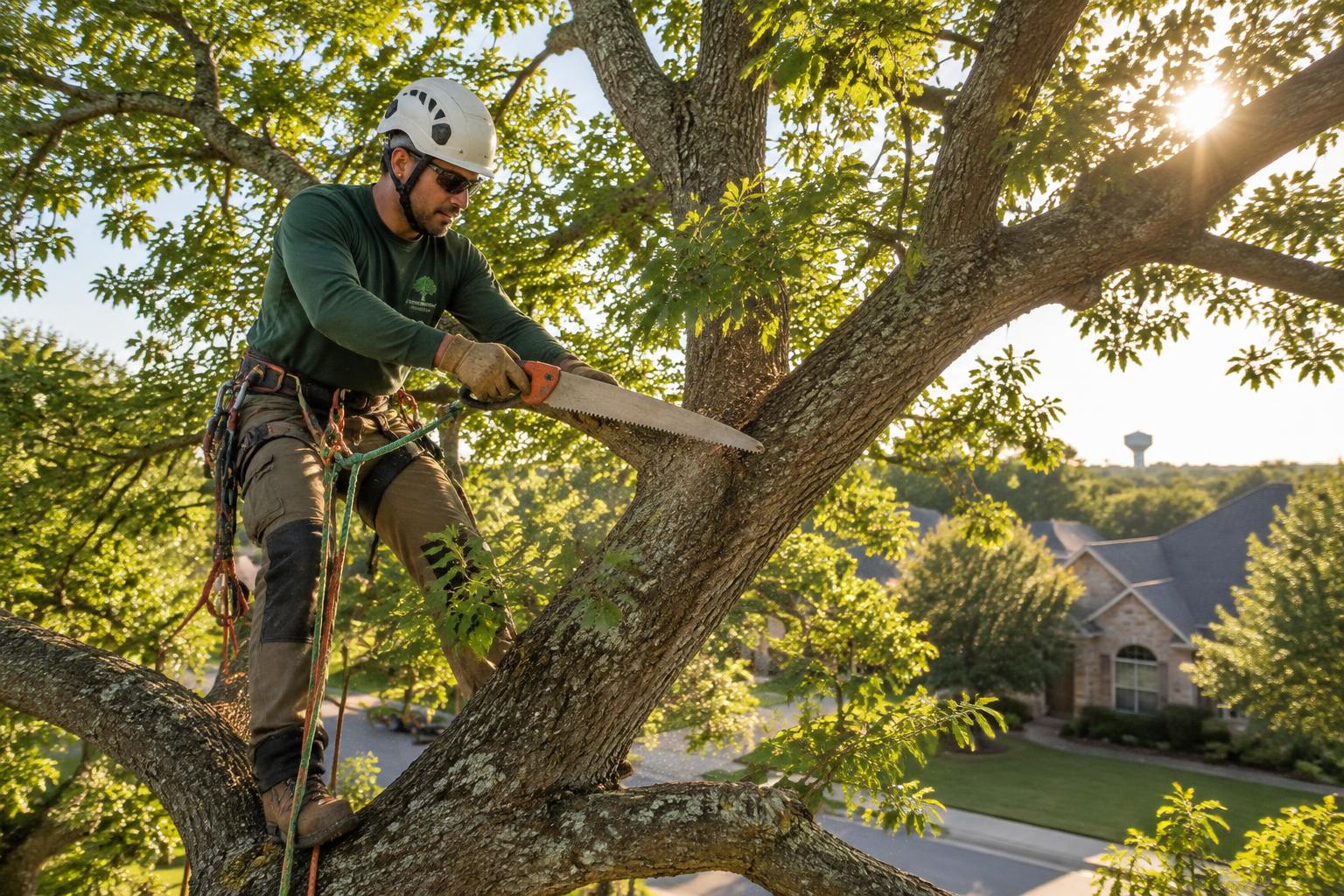
Arborists can often install dynamic or static cabling systems high in the canopy to redistribute stress during storms. Combined with selective weight-reduction pruning on heavy lateral limbs, stabilization preserves the tree while mitigating risk to adjacent homes.
Remediating Root Stress in Local Clay Soils
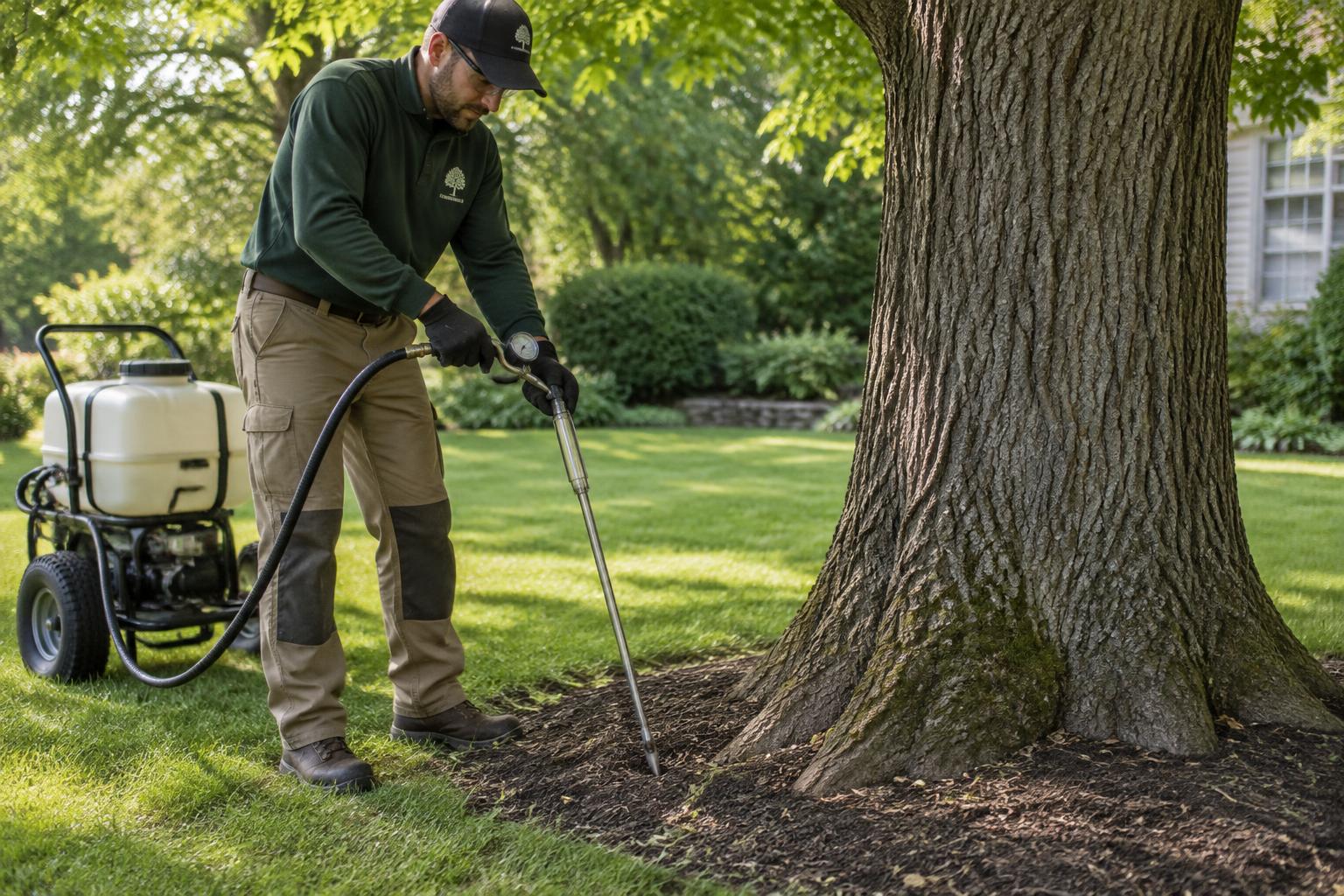
Trees throughout Cypress and Spring frequently show canopy thinning due to compacted subsoils that starve fine feeder roots of oxygen. When root decline is caught early, methods such as vertical mulching, radial trenching, or air-spade aeration can reverse decline without cutting into the canopy.
Restoring soil permeability allows water to drain naturally during Gulf rain bands and ensures vital oxygen reaches root systems during dry spells.
When Removal Becomes Unavoidable
- Extensive fungal conks or decay mushrooms fruiting around the root flare or lower trunk
- A hollow trunk where the remaining outer sound wood is less than one-third of the trunk diameter
- Sudden soil heaving or exposed cracked roots indicating that root anchorage has failed
- Over 50 percent of the main structural branches are dead or heavily rotted
Want a Specialist to Take a Look?
Book a free consultation with our TCIA Certified Tree Care Specialists and save 10% on this month's service.