The heavy clay soils common across Tomball and northern Harris County present distinct structural challenges for both native and planted trees. While clay holds mineral nutrients effectively, its microscopic particles pack tightly together, severely limiting the oxygen and drainage roots need to thrive. Understanding how local soil dynamics work beneath the surface is critical to keeping neighborhood canopies healthy.
The Shrink-Swell Cycle and Root Mechanics
Tomball clay expands significantly when saturated and contracts tightly during dry Texas summers. This continuous shrink-swell cycle puts direct physical stress on tree root systems, often tearing fine feeder roots as the ground pulls away from the root bark.
When prolonged wet periods saturate the ground, clay holds standing water in the root zone. Without adequate air pockets, roots suffocate from lack of oxygen, which inhibits the tree's ability to take up water and nutrients once dry weather returns.
Signs of Clay-Induced Root Stress
- Canopy dieback starting at the very tips of upper branches
- Surface roots protruding excessively above turf as the tree searches for atmospheric oxygen
- Interveinal chlorosis, or yellowing leaves with green veins, indicating poor nutrient uptake
- Premature leaf drop during late summer heat
- Persistent standing water around the root zone for more than 24 hours after heavy rain
The Danger of Compaction Around Mature Trees
Clay soil compacts faster than sandy or loamy soils. Routine activities like mowing with heavy commercial equipment, home remodeling, or parking vehicles beneath the dripline compress the soil particles, eliminating vital pore space.
Once compacted, clay creates an impenetrable barrier that sheds water rather than absorbing it. Rain simply runs off into the street, leaving deep roots in a perpetual state of drought even after major storms.
Arboricultural Solutions for Heavy Soil
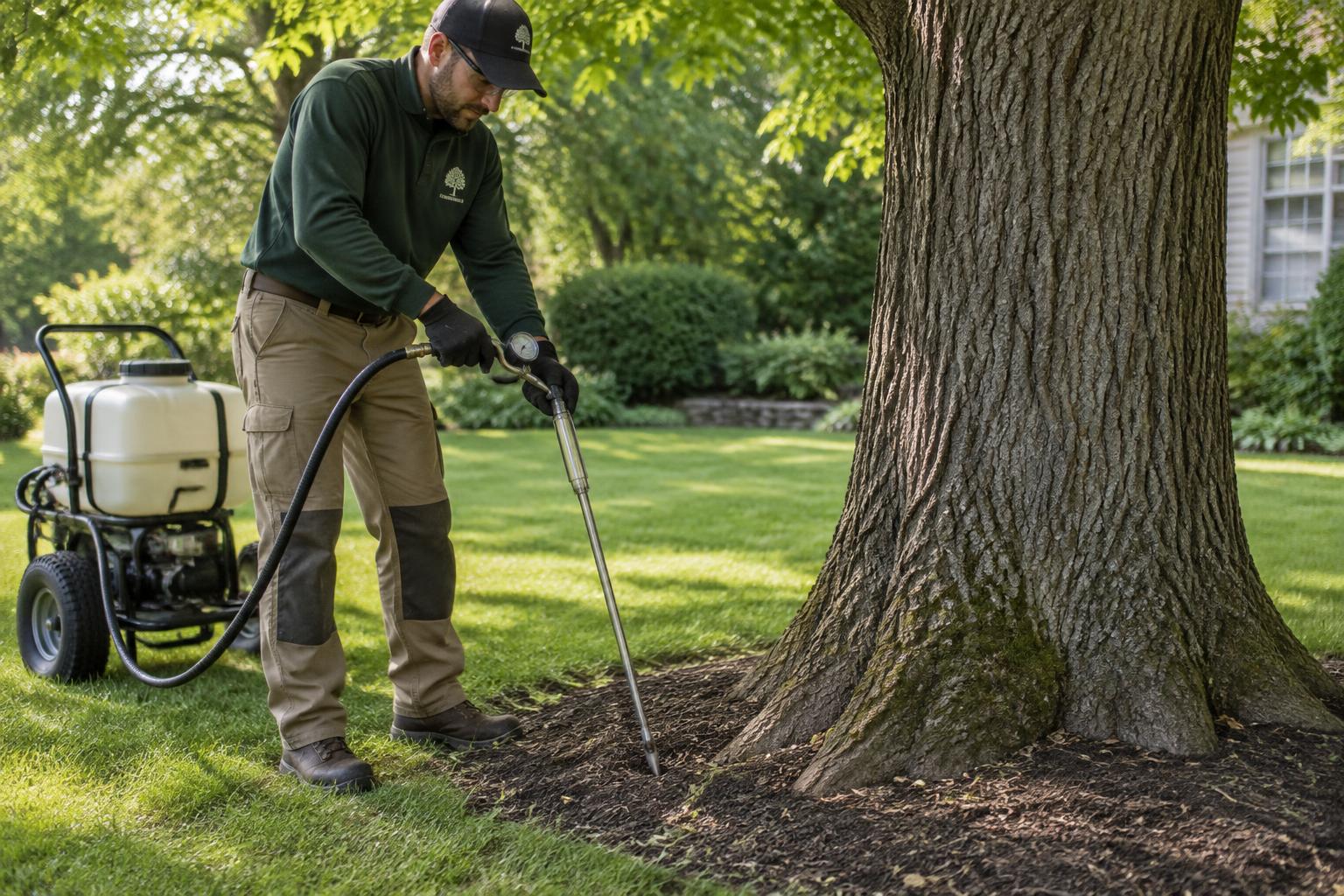
- Pneumatic decompaction using an air-spade to fracture dense clay without damaging roots
- Incorporating composted organic matter into radial trenches to improve soil biology and aeration
- Applying a coarse 2- to 4-inch layer of wood mulch to moderate soil temperatures and reduce surface crusting
- Transitioning to slow, deep drip irrigation rather than frequent shallow sprinkler cycles
- Ensuring root flares remain completely exposed above grade rather than buried under clay fill
Want a Specialist to Take a Look?
Book a free consultation with our TCIA Certified Tree Care Specialists and save 10% on this month's service.