Discovering dead branches, sparse foliage, or storm damage on a mature tree often leads property owners to assume complete removal is the only safe option. However, trees possess significant defense mechanisms, and many common health issues can be corrected before structural integrity is lost. Knowing what symptoms can be addressed allows you to protect valuable shade and curb appeal across Northwest Houston.
Canopy Dieback Versus Root Failure
Canopy dieback often appears alarming, but losing upper branches does not automatically indicate that the root system has died. In areas like Cypress, Tomball, and Spring, severe summer heat coupled with dense clay soil frequently stresses root systems, causing trees to shed peripheral limbs to conserve energy.
If the trunk is structurally intact and the inner bark shows green cambium tissue beneath the surface, the tree is still active. Removing deadwood, aerating compacted soil, and addressing moisture imbalances can stimulate fresh growth and stabilize the tree's health over subsequent growing seasons.
Common Symptoms That Are Often Manageable
- Minor pest infestations that have not penetrated the primary vascular system.
- Foliar fungal infections that defoliate branches seasonally but do not compromise trunk wood.
- Isolated dead or damaged limbs resulting from localized wind or lightning strikes.
- Surface bark damage from lawn equipment that covers less than one-third of the trunk circumference.
Structural Remediation Through Cabling and Bracing
Mature water oaks, pecans, and post oaks in Magnolia and The Woodlands sometimes develop heavy, competing stems with narrow branch angles. Left unmanaged, these weak unions can split under the load of high winds, but structural issues do not always warrant cutting the entire tree down.
TCIA-compliant cabling and bracing systems can be installed in the upper canopy to redistribute stress and reduce the likelihood of branch failure. Combined with selective canopy thinning to reduce wind drag, support systems allow homeowners to preserve large shade trees while managing potential liability.
Conditions That Typically Require Removal
- Trunk decay or hollow cavities compromising more than 40 percent of the wood structure.
- Noticeable ground heaving or severed structural roots on the windward side of a leaning tree.
- Active fungal conks or mushrooms growing in large clusters directly from the root flare or lower trunk.
- Advanced systemic diseases, such as aggressive oak wilt infections in vulnerable red oak species.
The Value of a Professional Health Assessment
Because the physical weight and drop zone of a mature tree involve genuine safety considerations, determining whether a tree is salvageable requires an objective evaluation. Factors such as decay depth, species-specific resilience, and soil composition must be weighed against targets on your property.
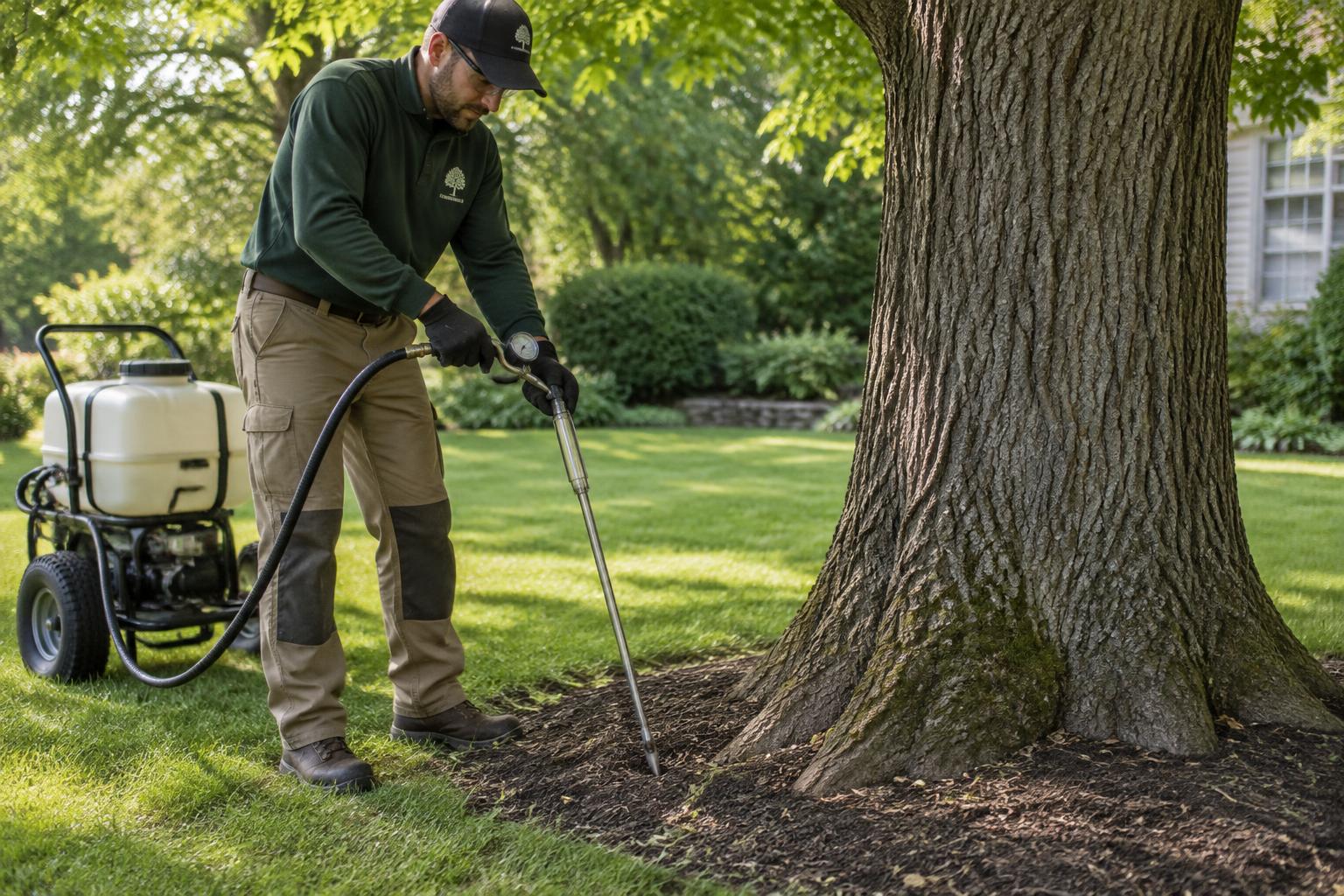
Consulting a TCIA Certified arborist provides an accurate diagnosis of whether treatments like deep-root fertilization, vertical mulching, or structural pruning will succeed, or whether removal is the only responsible choice.
Want a Specialist to Take a Look?
Book a free consultation with our TCIA Certified Tree Care Specialists and save 10% on this month's service.